

Open concept kitchens have reshaped how Boston and Newton homeowners think about the heart of their home. Removing the wall between a kitchen and living area can transform a closed, compartmentalized floor plan into something that feels larger, more connected, and significantly more functional for modern life. But the decision is not as simple as picking up a sledgehammer.
The open concept kitchen remodeling pros and cons conversation looks different for a South End brownstone than it does for a Newton colonial. Older homes have load-bearing walls, unique structural considerations, and plumbing and electrical layouts that were never designed with open floor plans in mind. What works beautifully in a new construction build can involve significant structural work in a 100-year-old Boston home.
This guide walks through the real advantages and trade-offs so you can approach your kitchen remodel with a clear picture of what to expect.
The Pros of Open Concept Kitchen Remodeling
More Natural Light and a Greater Sense of Space
One of the most immediate benefits of opening up a kitchen is the way light moves through the space. When walls come down, natural light from windows in the living or dining area flows into the kitchen, reducing the need for artificial lighting during the day. In Boston homes where square footage is often at a premium, this effect can make a modest layout feel considerably larger.
The visual connection between rooms also creates a sense of depth. A 12-foot kitchen that flows into a 16-foot living area reads as a much more generous space than either room would on its own. For Boston and Newton homeowners looking to maximize the perceived size of their home, this is one of the strongest arguments for going open.
Better Flow for Entertaining and Family Life
Open layouts are designed around how people actually live. In a traditional closed kitchen, the cook is separated from guests during gatherings. In an open concept plan, the kitchen becomes the social center of the home. Conversations carry naturally between cooking and seating areas, and supervising children in an adjacent living room becomes effortless.
This functional benefit is one reason open concept layouts have remained popular in the Boston and Newton market despite shifting design trends. For families who spend most of their time in the shared living areas of the home, the quality-of-life improvement is tangible and daily.
Improved Resale Value in the Boston Market
Open concept kitchens have consistently tested well with buyers in the Greater Boston real estate market. Buyers touring homes in neighborhoods like Jamaica Plain, West Roxbury, and Newton Centre frequently prioritize open layouts on their must-have lists. A well-executed open concept kitchen remodel can meaningfully increase a home’s appeal and sale price.
This is especially true when the remodel is done with quality materials and professional execution. A kitchen remodeling cost breakdown for MA homeowners provides realistic numbers to help you understand the investment and likely return in the local market.
The Cons of Open Concept Kitchen Remodeling
Noise, Odors, and the Loss of Privacy
The same openness that makes an open concept kitchen feel connected also means there are no barriers. Cooking smells travel freely into the living room and upstairs through open stairwells. The noise of a blender, a boiling pot, or a dishwasher running competes directly with conversations in the adjacent sitting area.
For Boston homeowners with older homes that have naturally insulated walls, this shift can be a genuine adjustment. If someone in the household works from home or has young children who nap during the day, the acoustic trade-offs are worth weighing carefully before walls come down.
Structural and Cost Considerations in Older Boston Homes
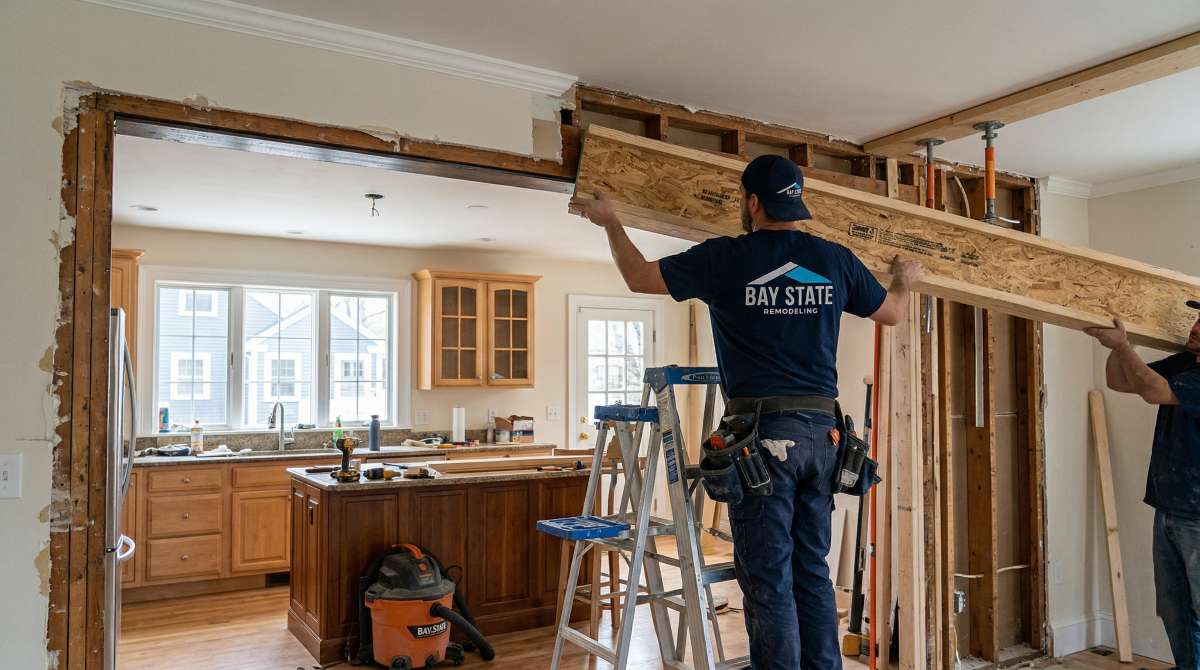
Many walls in older Boston and Newton homes are load-bearing. Removing them is not simply a cosmetic project. It requires a structural engineer to assess the wall, the installation of a properly sized header or beam, and in many cases, modifications to the foundation or adjacent framing. This structural work adds cost and complexity that does not apply in newer construction.
Beyond structure, older homes often have plumbing stacks, electrical panels, and ductwork routed through the walls that would need to be relocated. These hidden elements are one of the most common sources of budget overruns in open concept kitchen remodels in the Boston area. A thorough assessment by an experienced design-build contractor before any work begins is essential.
Heating, Cooling, and Energy Efficiency
Boston winters are demanding, and New England homes are built with that in mind. Closed rooms are easier to heat efficiently than large open spaces. When a kitchen and living area are combined into one zone, your HVAC system has to work harder to maintain consistent temperatures, which can increase energy costs.
This is particularly relevant for Boston homeowners in older homes that are still working toward full insulation upgrades. Opening up the floor plan without addressing the thermal envelope of the home can result in drafts and uneven temperatures that undercut the comfort gains from the renovation.
Open Concept Kitchen: Pros and Cons at a Glance
| Factor | Pro | Con |
| Light and Space | More natural light; rooms feel larger | May feel less defined or private |
| Entertaining | Easier to host; social cooking experience | Noise from kitchen carries into living areas |
| Odors | Ventilation feels more natural | Cooking smells spread throughout the home |
| Structure (Boston/Newton) | Can reveal and modernize hidden systems | Load-bearing walls add cost and complexity |
| Resale Value | Strong buyer appeal in Greater Boston | Open layouts may not suit all future buyers |
| Energy Efficiency | Better airflow in warmer months | Harder to zone-heat in New England winters |
| Cleaning and Organization | Clutter is contained to one visible zone | Kitchen mess is visible from all living areas |
Is an Open Concept Kitchen Right for Your Boston Home?
The answer depends on your home’s structure, your household’s lifestyle, and your long-term goals. Not every Boston or Newton home is equally suited to an open concept conversion, and not every homeowner will find the trade-offs worthwhile. The key is evaluating your specific situation rather than following a trend.
Questions to Ask Before You Commit
- Is the wall load-bearing? A structural assessment is the starting point for any open concept remodel in an older home.
- What is behind the wall? Plumbing, electrical, or HVAC systems routed through that wall will need to be rerouted, adding to the project scope.
- How do you use the space now? If you frequently entertain or want a more connected family environment, an open layout is likely to deliver real daily value.
- What is your HVAC setup? Homes with zone heating or newer systems adapt more easily to open floor plans than those with older single-zone systems.
- What is your budget for unexpected findings? In older Boston homes, build in a 15 to 20 percent contingency for discoveries behind walls.
If you are considering a full kitchen redesign alongside the open concept conversion, exploring bathroom remodel ideas from Bay State Remodeling can spark broader thinking about how design choices in one room influence the rest of your home’s aesthetic.
What the Open Concept Kitchen Remodeling Process Looks Like
A well-run open concept kitchen remodel in a Boston or Newton home follows a structured sequence. Skipping steps or compressing the timeline is the most common reason these projects go over budget or run into problems mid-construction.
| Phase | What Happens | Typical Duration |
| Structural Assessment | Engineer evaluates wall type and beam requirements | 1-2 weeks |
| Design and Permitting | Layout finalized; permits submitted to Boston ISD or Newton | 3-6 weeks |
| Demolition | Wall removed; systems rerouted as needed | 3-7 days |
| Structural Rough-In | Beam installed and inspected | 3-5 days |
| Mechanical Rough-In | Electrical, plumbing, HVAC updated and inspected | 1-2 weeks |
| Finish Work | Flooring, cabinetry, countertops, painting | 2-4 weeks |
| Final Inspection | Municipal sign-off and project close-out | 1-3 days |
For homeowners who are also considering other home improvements alongside their kitchen project, this guide on attic conversion ideas to add living space outlines how adding usable square footage elsewhere in the home can work in parallel with a kitchen remodel.
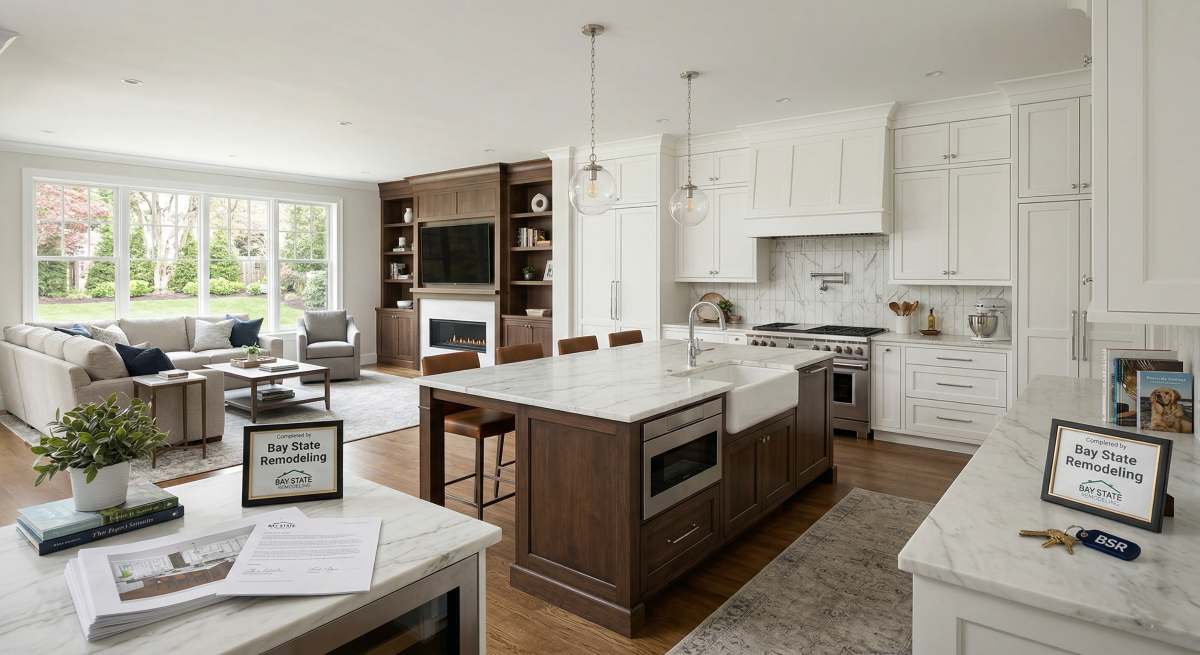
Homeowners who want to keep the remodeling momentum going beyond the kitchen can also browse these modern bathroom ideas and bathroom decor ideas from Bay State Remodeling to see how a cohesive design approach across rooms improves the entire home.
Talk to Bay State Remodeling Before You Remove a Single Wall
The open concept kitchen remodeling pros and cons play out differently in every home. What matters most is getting an honest, experienced assessment of your specific property before any decisions are final. Bay State Remodeling works with Boston and Newton homeowners on full-service design-build kitchen remodels, from the structural evaluation through to the final coat of paint.
Our team handles permitting, structural engineering coordination, mechanical rerouting, and finish design under one contract, so you never have to manage multiple contractors or worry about gaps in accountability. Contact Bay State Remodeling today to schedule your consultation and take the first step toward a kitchen that works for how you actually live. Visit baystateremodeling.com to get in touch.
Frequently Asked Questions
What are the main pros and cons of an open concept kitchen remodel?
The main advantages include more natural light, better flow for entertaining, and improved resale appeal in the Boston market. The primary trade-offs include noise and odors traveling freely between rooms, potential structural complexity in older homes, and increased heating costs in New England winters.
How much does an open concept kitchen remodel cost in Boston?
Costs vary based on whether the wall is load-bearing, the complexity of mechanical rerouting, and the scope of the kitchen renovation itself. In the Boston and Newton market, structural open concept conversions with a kitchen remodel typically range from $40,000 to $100,000 or more depending on finishes and scope.
Do I need a permit to remove a wall for an open concept kitchen in Boston?
Yes. Any structural wall removal in Boston requires a permit from the City of Boston Inspectional Services Department. Newton has similar requirements. Work done without proper permits can result in fines and complications at the time of sale. A licensed design-build contractor handles this as part of the project scope.
Is an open concept kitchen a good idea for older Boston homes?
It can be, but it requires a more thorough assessment than in newer construction. Many older Boston homes have load-bearing walls, outdated electrical panels, and plumbing routed through kitchen walls. These factors add cost and complexity but are manageable with the right contractor and a proper contingency budget.
Does an open concept kitchen increase home value in the Boston area?
In most cases, yes. Open concept layouts consistently test well with buyers in the Greater Boston and Newton real estate markets. A professionally executed open concept kitchen remodel typically enhances both the appeal and the sale price of a home, particularly when paired with updated finishes and modern cabinetry.
Putting It All Together
The open concept kitchen remodeling pros and cons come down to your home, your lifestyle, and your goals. For many Boston and Newton homeowners, the benefits of a more connected, light-filled living space outweigh the trade-offs. For others, the structural costs or lifestyle considerations tip the balance the other way.
The most important thing you can do is go into the decision with full information. Know what your walls contain, understand the permit process, plan for contingencies, and work with a contractor who has done this specific type of project in your market before.
Bay State Remodeling has the experience and the local knowledge to help you make the right call for your home. Reach out today and build something you will be glad you planned for.
Thinking about a project of your own
A 30-minute consult is usually enough to confirm whether we are the right fit.
Book a consult