
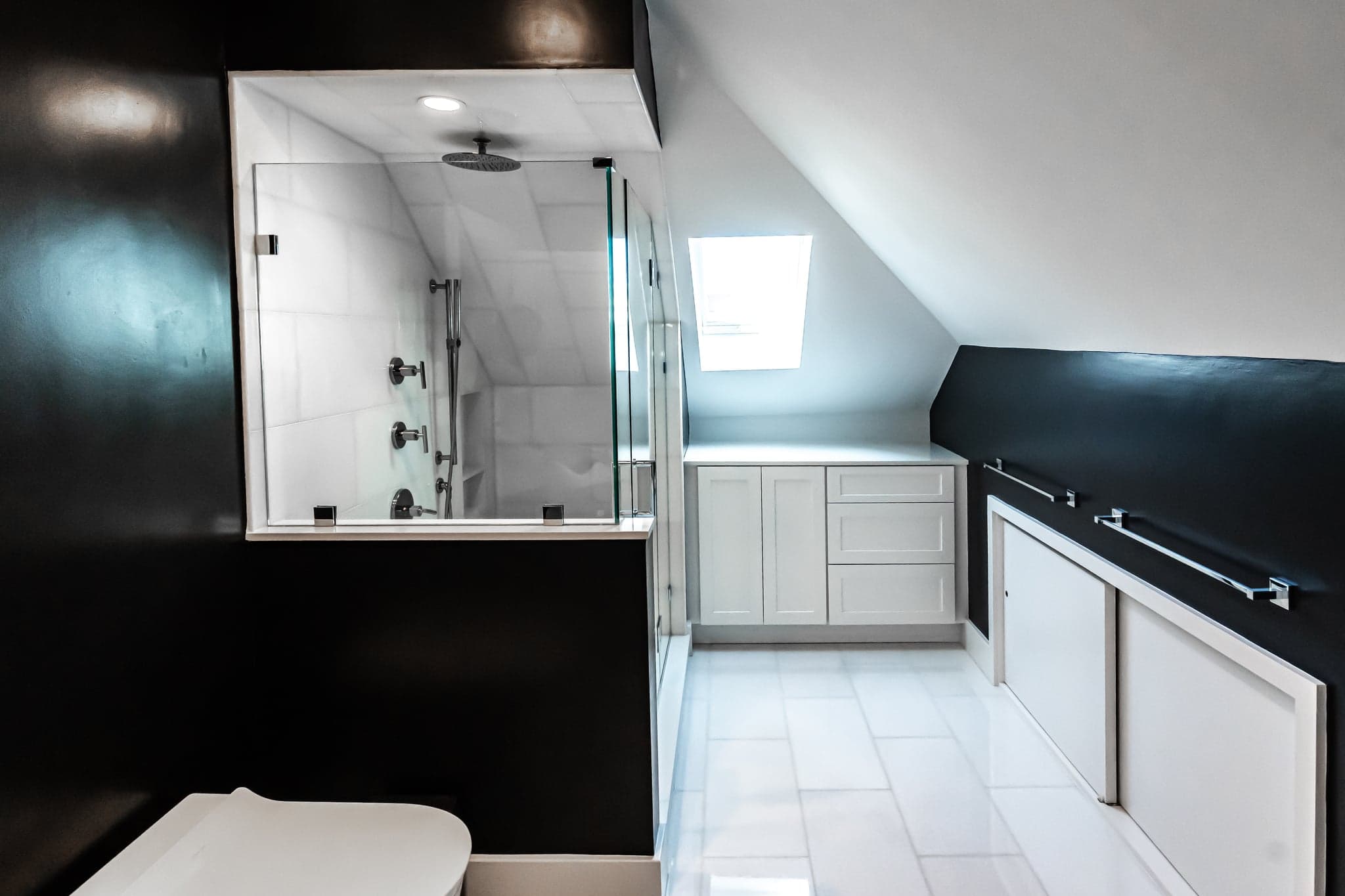
The walk-in shower vs bathtub debate is one of the most common questions Boston and Newton homeowners face when planning a bathroom renovation. It feels like it should have a clear answer, but the right choice actually depends on a specific combination of factors: the size of your bathroom, how many bathrooms are in the home, your lifestyle, how long you plan to stay, and what the Boston real estate market rewards.
This guide cuts through the generalizations and gives you a practical, honest framework for making this decision in the context of Greater Boston’s housing market and the specific bathrooms that appear in this region’s older housing stock. Bay State Remodeling has worked through this question with hundreds of homeowners in Boston and Newton, and what follows is exactly the kind of guidance we provide during a design consultation. For a broader view of how this decision fits into a larger renovation plan, our guide on whole house renovation versus room by room remodeling helps you see how the bathroom fits into the bigger picture.
The Case for a Walk-In Shower
A walk-in shower has become the preferred choice for master bathroom renovations across the greater Boston area, and for good reason. Here is what makes it the stronger option in most primary bathroom contexts:
Space Efficiency
A standard alcove bathtub occupies 13 to 15 square feet of floor space. A walk-in shower with a frameless glass enclosure can be built in as little as 9 square feet and still feel generous. In Boston and Newton homes where master bathrooms are typically between 45 and 75 square feet, that difference in footprint translates directly into more circulation space, more storage, or a larger vanity.
Daily Usability
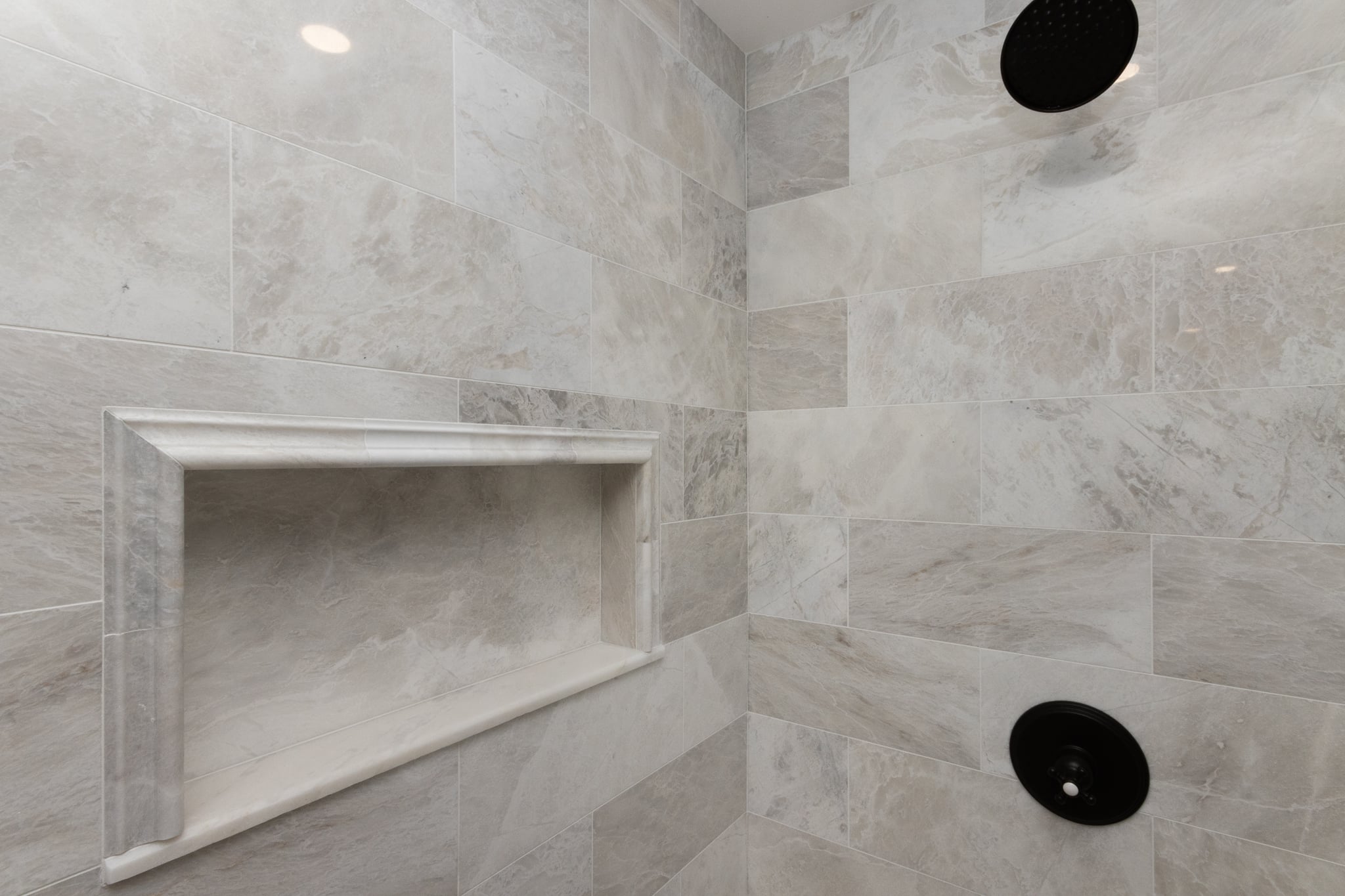
Most adults shower rather than bathe on a daily basis. A walk-in shower that is designed with care, including a rainfall showerhead, a built-in bench, and good tile work, becomes a genuine daily luxury rather than a fixture you walk past without using. A bathtub that is rarely filled delivers none of that daily value while continuing to occupy a significant portion of your bathroom floor.
Design Flexibility and Visual Impact
Walk-in showers offer far more design flexibility than bathtubs. Custom tile configurations, frameless glass that creates an open, airy feeling, steam generator options, multiple showerheads, and bench seating are all achievable within a single footprint. This flexibility is central to the modern bathroom design approach that Bay State Remodeling brings to renovation projects across Boston and Newton.
Accessibility
A curbless or low-threshold walk-in shower is far more accessible than a bathtub for homeowners planning to age in place. Stepping over a 14 to 18 inch tub wall becomes progressively more difficult with age and represents a genuine fall risk. A well-designed curbless shower eliminates that risk entirely and meets ADA-accessible design standards that will serve you better as the years pass.
The Case for Keeping the Bathtub
The bathtub is not simply a relic. For the right household and the right bathroom, keeping or installing a bathtub remains the smarter choice. Here is when the tub wins:
Young Children in the Home
Bathing toddlers and young children in a walk-in shower is genuinely difficult and often impractical. The bathtub is the most functional and safest way to bathe young children, and households with kids in the 1 to 7 age range typically use the tub frequently. If this describes your family, retaining at least one tub in the home is a practical necessity rather than a preference.
The Relaxation Factor
For homeowners who genuinely use the bath for soaking, a freestanding or deep soaking tub offers a relaxation experience that no shower can replicate. A well-chosen freestanding tub is also a significant design statement that anchors a larger bathroom beautifully. If this is how you actually use your bathroom, the tub earns its floor space.
Resale Considerations
This is where the decision becomes nuanced in the Boston and Newton market. The general guidance from real estate professionals in Massachusetts is that a home with no bathtub anywhere in the house can face resistance from buyers with young families. However, a master bathroom without a tub is completely acceptable, provided a tub exists in another bathroom in the home. If your home has only one bathroom and you are considering removing the tub entirely, that decision deserves careful consideration.
Side-by-Side Comparison: Walk-In Shower vs Bathtub
The table below compares both options across the factors that matter most to Boston and Newton homeowners:
| Factor | Walk-In Shower | Bathtub |
| Floor space used | 9 to 16 sq ft (frameless 36×36 minimum) | 13 to 20 sq ft (standard alcove) |
| Install cost (Boston) | $4,000 to $15,000+ depending on tile | $1,500 to $6,000 for tub and surround |
| Daily cleaning time | 2 to 5 minutes with squeegee | 5 to 10 minutes, more grout to scrub |
| Accessibility | Step-free entry option available | Requires stepping over a 14-18 inch wall |
| Relaxation value | Rainfall or steam options available | Full-body soak, jets, aromatherapy |
| Resale impact (MA) | Strong positive in master bath | Positive if at least one tub in the home |
| Maintenance level | Low with proper tile and grout sealing | Medium, especially around the faucet deck |
| Design flexibility | Very high, custom tile and configuration | Moderate, limited by tub dimensions |
The Decision Guide: Which Is Right for Your Situation?
Use this table to match your specific circumstances to the recommended choice:
| Your Situation | Better Choice | Why |
| Small bathroom under 50 sq ft | Walk-in shower | Tub takes too much floor space to remain functional |
| Primary bath, no other tub in home | Keep the tub | At least one tub elsewhere protects resale value |
| Primary bath, tub exists elsewhere | Walk-in shower | Shower in master is preferred by most buyers |
| Planning to age in place | Walk-in shower | Step-free entry is safer and more accessible long term |
| Young children in the home | Keep the tub | Bathing young children in a shower is impractical |
| Prioritising resale within 3 years | Depends on home | Consult a designer; Boston market is nuanced |
| Upgrading for personal enjoyment | Walk-in shower | Steam, rainfall, and bench options exceed tub comfort |
| Tight budget renovation | Tub refinishing | A reglazed tub costs a fraction of a shower build-out |
What the Boston Real Estate Market Actually Tells Us
Boston and Newton are among the most competitive real estate markets in New England, and buyer preferences here are worth understanding clearly before making a renovation decision that affects resale value.
The data from Massachusetts real estate transactions consistently shows that master bathrooms with high-quality walk-in showers perform well in the market, particularly when at least one tub exists elsewhere in the home. Buyers in the Newton and inner suburbs market are sophisticated and respond to premium finishes and thoughtful design. A beautifully executed frameless glass shower with custom tile often reads as a more valuable feature than a dated or poorly maintained bathtub.
However, the one-tub rule holds firmly in this market. Homes with no tub anywhere are perceived as having a missing feature, and that perception affects both buyer interest and appraisal values. If you are planning to sell within the next five to seven years and your home has only one bathroom, retaining a tub is the safer investment. For a practical sense of how this kind of decision fits into the broader renovation planning process, our guide on how to choose a home remodeling contractor covers how to find a design partner who understands both the aesthetic and the market context.
Cost Comparison for Boston and Newton
Installation cost is one of the most practical factors in this decision, and the Boston area market has specific pricing that differs significantly from national averages.
Walk-In Shower Installation Costs
A basic walk-in shower replacement in the Boston and Newton market typically starts at $4,000 to $6,000 for a standard tile surround and frameless door. Mid-range projects with custom tile work, a built-in niche, and a quality showerhead system run $8,000 to $12,000. High-end custom showers with steam generators, heated floors, and premium fixtures regularly exceed $15,000 to $20,000. For a realistic sense of how material and labour choices affect renovation budgets across different project types in Massachusetts, our kitchen remodeling cost breakdown for MA homeowners provides useful comparative context.
Bathtub Installation Costs
A new alcove tub with a tile surround typically costs $1,500 to $4,000 installed in the Boston area. A freestanding soaking tub with freestanding fixtures runs $3,000 to $8,000 depending on the tub selection. Jetted or whirlpool tubs start at $2,500 and can reach $8,000 or more for premium options with full plumbing work.
The Hidden Cost of Keeping a Tub You Do Not Use
A bathtub that is never filled but occupies 15 square feet of floor space represents an ongoing cost in terms of lost function. In a Boston or Newton bathroom where every square foot has a renovation cost attached to it, a fixture that delivers no daily value is worth reconsidering honestly.
How to Make This Decision for Your Specific Bathroom
The right answer for your home comes down to three questions asked in order:
- Is there at least one tub elsewhere in the home? If yes, the master bath is free to become a walk-in shower space without resale risk. If no, the calculus changes.
- Who uses this bathroom and how? Young children, a household that genuinely soaks, or accessibility needs for an aging occupant all point toward specific choices that override general guidance.
- How long are you staying? Renovating primarily for personal enjoyment over 10 or more years is a very different decision from renovating primarily for resale in three to five years.
A qualified design-build team will walk through these questions with you and provide specific recommendations based on your bathroom’s dimensions, your household’s needs, and the current Boston and Newton real estate environment. Explore our bathroom remodel ideas and bathroom decor ideas guides to start building a visual picture of what each direction could look like for your space.
Picture Suggestion: A Bay State Remodeling design consultant sitting with a Boston homeowner at a kitchen table reviewing bathroom layout drawings and tile samples. A laptop shows 3D design renders of both a walk-in shower and a freestanding tub option. Professional, warm, collaborative setting. Alt text: ‘Bay State Remodeling design consultation for walk in shower vs bathtub decision in Boston MA bathroom renovation.’
Talk to a Boston Bathroom Design Expert Before You Decide
The walk-in shower versus bathtub decision is one that benefits enormously from a conversation with a designer who knows the Boston and Newton market, understands your specific bathroom’s dimensions, and can show you exactly what each option would look like in your space. Bay State Remodeling offers design consultations for bathroom renovation projects throughout Boston, Newton, and the surrounding Greater Boston area.
We handle everything from initial design through permitting and installation. Understanding how long a bathroom renovation takes in Boston helps you plan your project timeline with realistic expectations from the start.
Schedule Your Bathroom Design Consultation with Bay State Remodeling and get expert guidance on the choice that is right for your home.
Frequently Asked Questions
Does removing a bathtub hurt resale value in Massachusetts?
It depends on the context. Removing the only bathtub in a home typically does hurt resale value in Massachusetts because buyers with young families specifically look for at least one tub. Removing the tub from the master bathroom while retaining a tub elsewhere in the home generally does not hurt resale value, and in many cases a premium walk-in shower in the master bath adds to it. The key rule in the Boston and Newton market is to ensure at least one tub remains in the home.
Is a walk-in shower more expensive than a bathtub?
Yes, in most cases. A quality walk-in shower with custom tile and frameless glass costs more than a standard alcove tub installation. However, a freestanding soaking tub with freestanding plumbing fixtures can approach or exceed mid-range shower costs. The comparison depends on the quality level of each option being considered.
What is the minimum size for a walk-in shower?
The minimum code-compliant walk-in shower in Massachusetts measures 36 by 36 inches. However, most designers and homeowners consider 36 by 48 inches the practical minimum for comfortable daily use. A 48 by 48 inch or 36 by 60 inch shower feels generous in a small bathroom without consuming the footprint of the bathtub it replaces.
Can I have both a walk-in shower and a bathtub in a small bathroom?
In most small Boston or Newton bathrooms under 60 to 70 square feet, fitting both a full-sized walk-in shower and a bathtub results in a layout that feels cramped and compromises both fixtures. Bathrooms of 80 square feet or more can accommodate both if the layout is carefully planned. A smaller soaking tub paired with a separate shower is achievable in some mid-size bathrooms with creative design.
How long does it take to convert a bathtub to a walk-in shower in Boston?
A tub-to-shower conversion in a Boston or Newton home typically takes 1 to 3 weeks of active construction depending on the scope of the tile work and whether any plumbing relocation is involved. The permitting phase in Boston and Newton adds approximately 2 to 4 weeks before construction begins. Bay State Remodeling coordinates all permitting as part of the project scope.
The Right Answer Is the One That Fits Your Life and Your Home
The walk-in shower vs bathtub question does not have a universal answer, but it does have a right answer for every specific home, household, and set of circumstances. For most Boston and Newton homeowners renovating a master bathroom where a tub exists elsewhere in the home, a well-designed walk-in shower is the higher-value, higher-enjoyment choice. For homes with one bathroom, young families, or households who genuinely use the tub, the bathtub earns its place.
Bay State Remodeling helps homeowners work through this decision every day, combining design expertise with an honest understanding of the Greater Boston real estate market. Contact us today to start the conversation about what is right for your bathroom.
Thinking about a project of your own
A 30-minute consult is usually enough to confirm whether we are the right fit.
Book a consult