
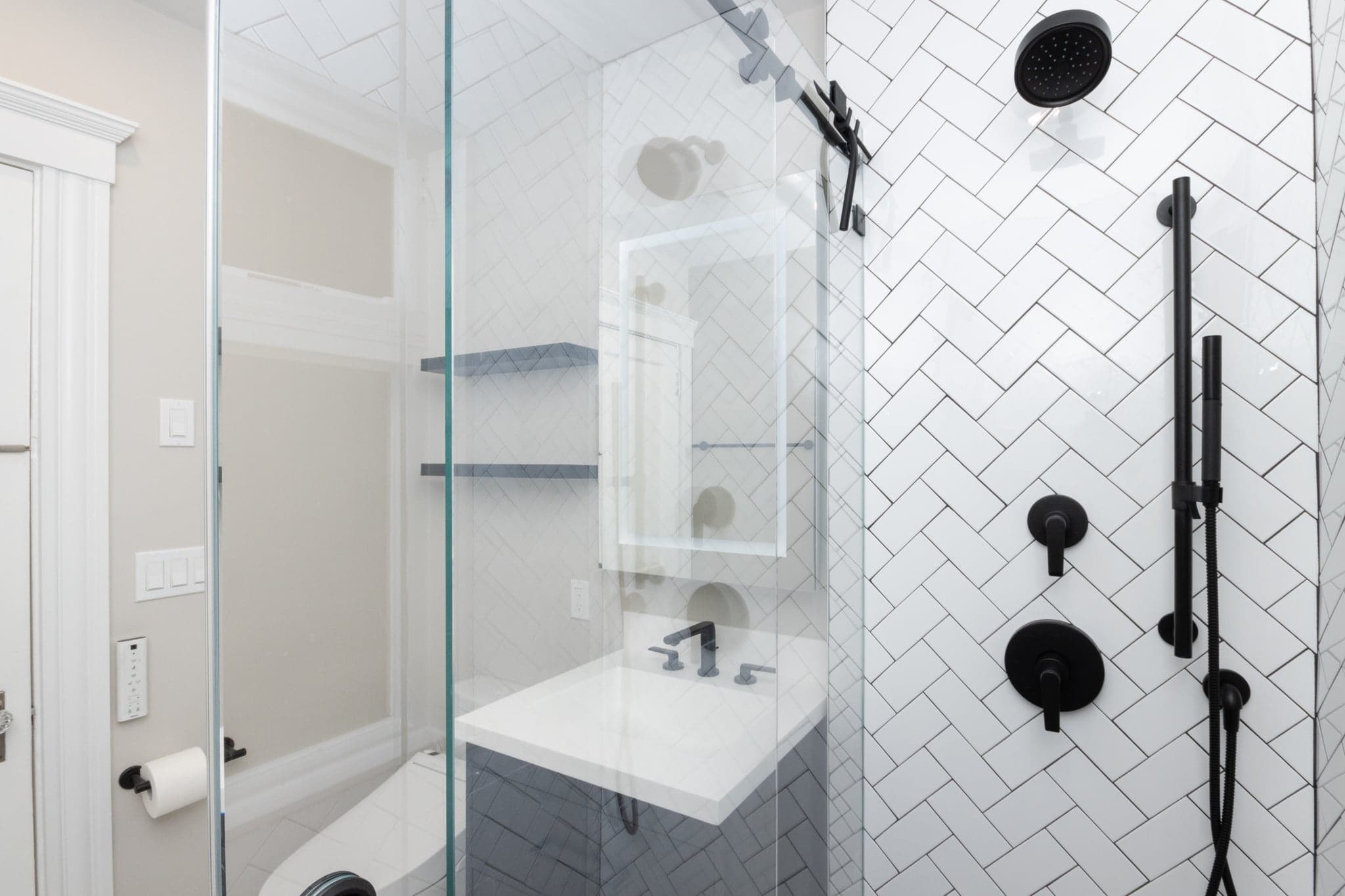
Boston and Newton homeowners know the challenge better than most. Older homes in these neighborhoods were built in an era when bathrooms were purely functional, and the result is typically a small, boxy space with fixtures pressed together and not an inch to spare. The good news is that small bathroom remodel ideas that maximize space have never been more sophisticated or more achievable, and a well-planned renovation can make a 45-square-foot bathroom feel genuinely comfortable and beautiful.
This guide covers the most effective design strategies, fixture choices, and layout decisions that Bay State Remodeling uses to transform compact bathrooms throughout Boston and Newton. Whether you are working with a primary bath that has not been updated since the 1980s or a guest bath that functions but never quite impresses, there is a remodel approach here that fits your space, your timeline, and your budget. For a broader view of how bathroom projects fit into a larger renovation plan, our overview of whole house renovation versus room by room remodeling helps you decide whether the bathroom is the right place to start.
Why Small Bathrooms in Boston and Newton Require a Different Approach
The housing stock in Boston and Newton includes a high proportion of homes built between 1890 and 1960. These properties typically feature bathrooms in the 35 to 65 square foot range, with layouts that were designed around the plumbing technology and fixture sizes of their era. Standard tub and toilet combinations were positioned for installation convenience rather than spatial efficiency, and original vanity and mirror configurations used far more wall space than necessary.
A modern small bathroom remodel does not simply replace old fixtures with new ones in the same positions. It rethinks the entire spatial relationship between fixtures, storage, lighting, and traffic flow. The difference between a bathroom renovation that merely updates finishes and one that genuinely maximizes space comes down to whether the layout itself has been reconsidered.
Massachusetts building codes also apply to bathroom renovations, including permit requirements for any work involving plumbing relocation, electrical upgrades, or structural modifications. Understanding the full scope and timeline of a bathroom project in this market is essential before committing to a design. Our guide on how long a bathroom renovation takes in Boston provides a realistic picture of what to expect from start to finish.
The Highest-Impact Space-Maximizing Strategies
Replace the Tub with a Walk-In Shower
For most small bathrooms, the bathtub is the single largest consumer of floor space. A standard alcove tub occupies approximately 13 to 15 square feet of floor area. Replacing it with a walk-in shower reclaims that space and creates a much more open, modern feel. A well-designed 36 by 36 inch shower uses just 9 square feet, and frameless glass enclosures eliminate the visual barrier that shower curtains and framed doors create.
In Boston and Newton, where master bathrooms in older homes frequently have tubs that are rarely or never used, this swap delivers the greatest return in terms of both perceived space and daily usability. If you are concerned about resale, current buyer preferences in the greater Boston market show that a high-quality walk-in shower in the master bath is at least as desirable as a tub, provided a tub exists somewhere else in the home.
Install a Floating Vanity
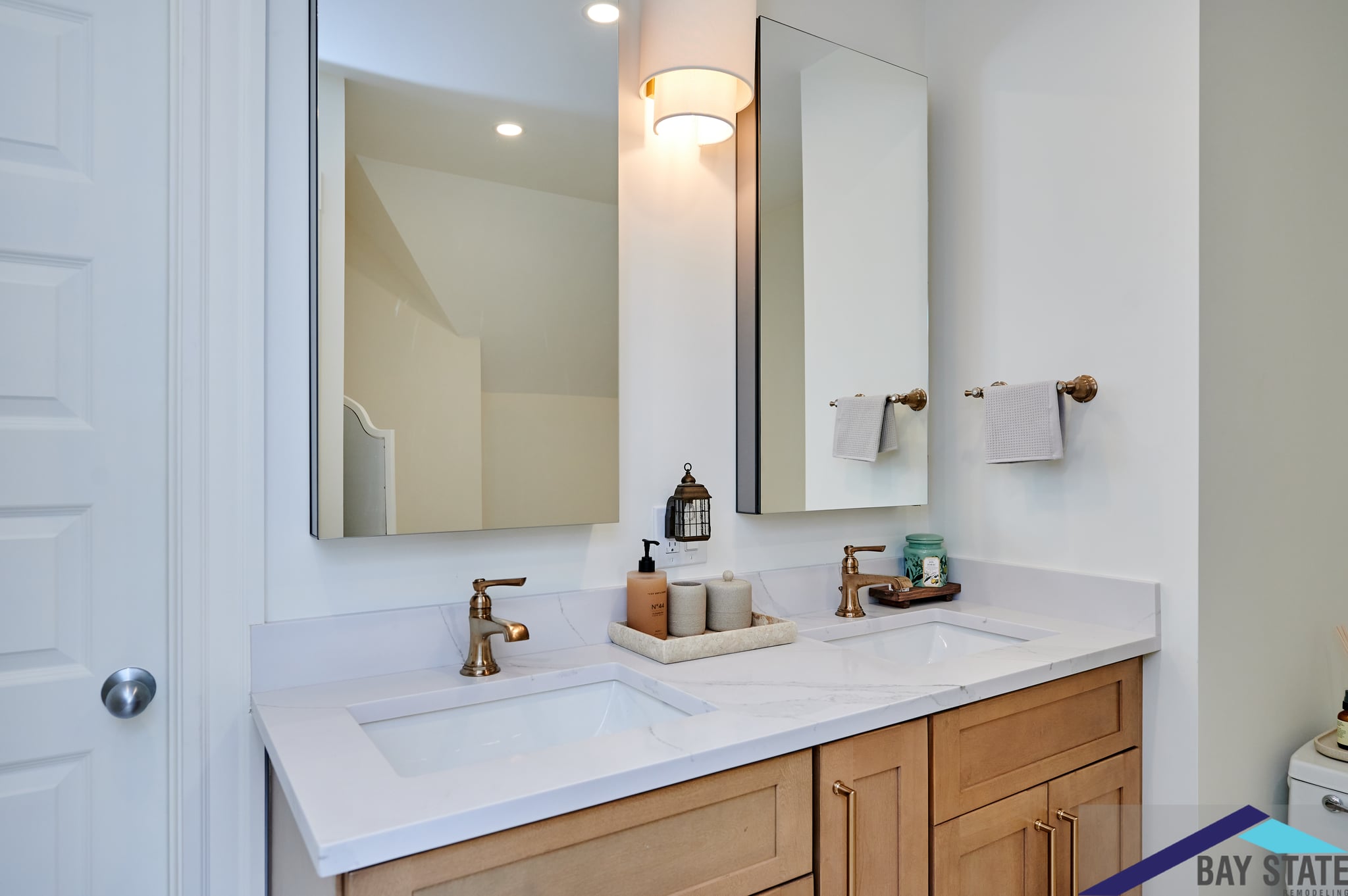
A wall-mounted or floating vanity keeps the floor visible from the door, which is one of the most effective visual tricks for making a small bathroom feel larger than it is. The uninterrupted floor line draws the eye across the room and creates a sense of depth that a floor-mounted vanity interrupts. Floating vanities also make cleaning easier, which is a practical benefit that complements the aesthetic one.
Choose a vanity depth of 18 to 20 inches rather than the standard 21 to 22 inches in a very tight space. The difference is subtle in use but significant in terms of how much clearance you gain between the vanity and the toilet or shower entry.
Switch to a Wall-Hung Toilet
A wall-hung toilet mounts directly to the wall with the cistern concealed inside a carrier frame built into the wall cavity. The result is a toilet that projects only 10 to 12 inches from the wall rather than the 28 to 30 inches of a standard floor-mounted unit. In a bathroom where every inch of clearance matters, this can mean the difference between a layout that feels cramped and one that actually functions comfortably.
The installation cost is higher than a standard toilet because it involves wall framing and a concealed cistern unit. However, in a renovation where the bathroom is already being opened up for other work, the incremental cost is modest relative to the spatial benefit.
Replace the Swing Door with a Pocket or Barn Door
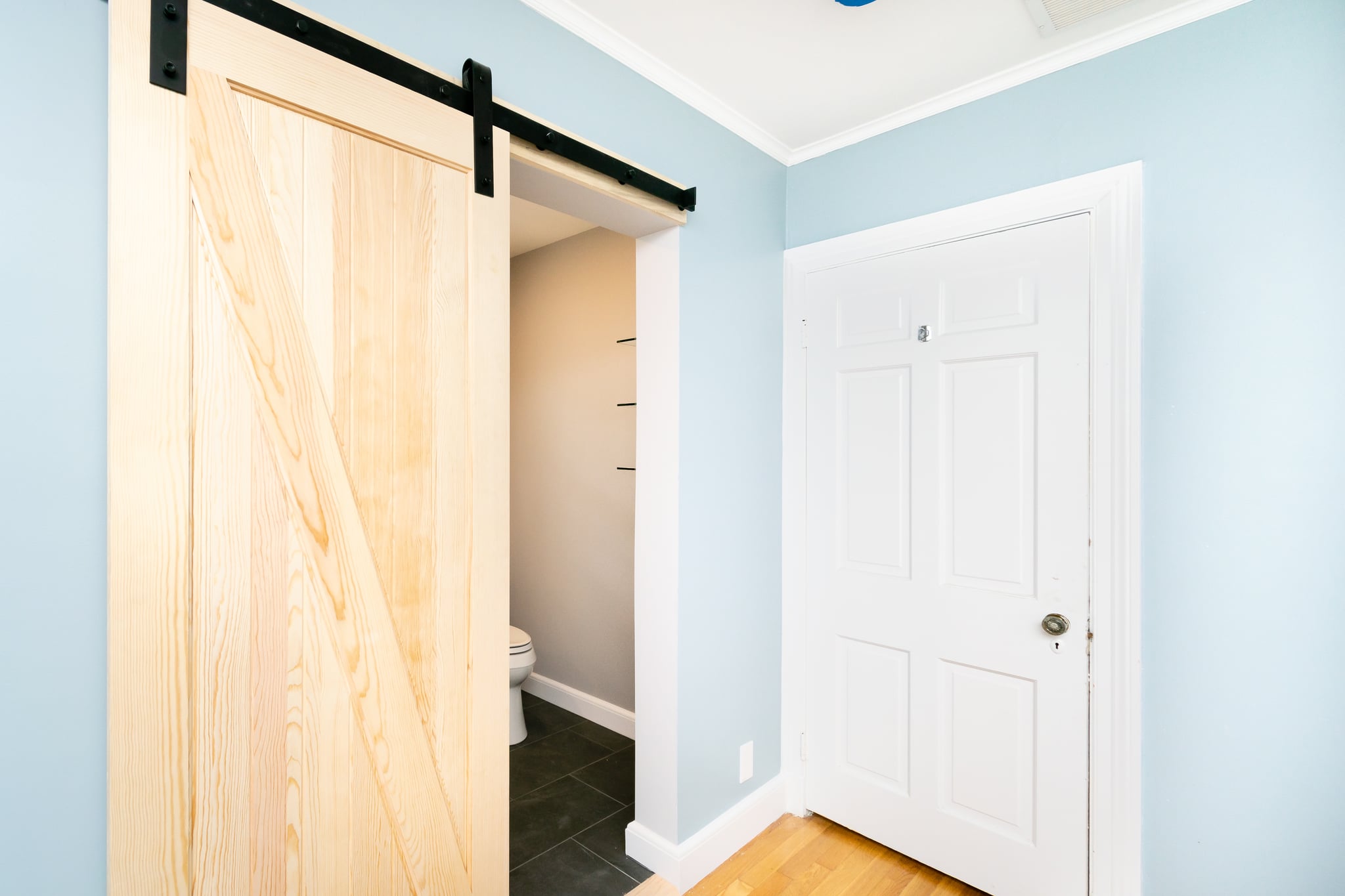
A standard bathroom door requires a clear swing arc of approximately 9 to 10 square feet, which is floor space that cannot contain any fixture or furniture. Replacing it with a pocket door that slides into the wall, or a barn door that slides along the wall face, eliminates that swing requirement entirely. This change alone can allow the repositioning of a vanity or the addition of a linen storage unit in a space that was previously blocked by the door path.
Use Large-Format Tile on Floors and Walls
Tile selection has a significant effect on how spacious a small bathroom feels. Large-format tiles (24 by 24 inches or larger) have fewer grout lines than smaller tiles, which reduces the visual fragmentation of the surfaces and makes the room feel larger. Light colours amplify this effect. For walls, continuing the same tile from the floor up to at least 60 inches creates a cohesive, expansive feel that stops the room from looking broken up by colour or material changes.
Space-Saving Fixture Comparison
The table below compares common space-saving fixture upgrades against standard alternatives so you can quickly identify which changes deliver the most value for your specific layout:
| Fixture | Space Saved vs Standard | Best For |
| Wall-hung toilet | Up to 10 inches of depth | Very small bathrooms under 40 sq ft |
| Corner sink | 6 to 12 inches of width | Bathrooms where the sink placement is the main constraint |
| Walk-in shower (no tub) | Removes 13 to 20 sq ft | Master bathrooms where the tub is rarely used |
| Sliding barn door | 8 to 10 sq ft of swing area | Any bathroom where the door hits a fixture when opened |
| Recessed medicine cabinet | Eliminates a protruding unit | Every bathroom; adds storage without adding depth |
| Floating vanity | Visual space plus floor area | Any bathroom to improve the sense of openness |
| Pocket door | Full door swing area | Tight layouts where a swing door is impractical |
Layout Strategy by Bathroom Size
The right space-maximizing approach depends on how much square footage you are starting with. Use this reference table to identify the strategy that fits your bathroom:
| Bathroom Size | Layout Strategy | Priority Move |
| Under 35 sq ft | Wet room or combined shower area with wall-hung fixtures | Eliminate the tub; go walk-in shower |
| 35 to 50 sq ft | Single wall layout or L-shaped fixture arrangement | Replace swing door with pocket or barn door |
| 50 to 70 sq ft | Standard layout with space-saving fixtures throughout | Floating vanity plus recessed storage |
| 70 to 100 sq ft | Full remodel with layout reconfiguration possible | Move the vanity wall to open the floor plan |
| Over 100 sq ft | Full design flexibility; focus on flow and storage | Add double vanity and dedicated storage zones |
Storage Solutions That Do Not Eat Into Floor Space
One of the biggest challenges in a small bathroom remodel is maintaining adequate storage without sacrificing the openness that the layout changes are working to create. The key is to move storage off the floor and into the walls and vertical surfaces.
Recessed Medicine Cabinets
A recessed medicine cabinet sits inside the wall cavity rather than projecting from the surface. It provides the same storage as a surface-mounted unit while adding zero depth to the room. In a bathroom where the vanity mirror was previously just a mirror, replacing it with a recessed cabinet adds significant storage without changing the visual profile of the wall.
Built-In Shower Niches
A tiled niche recessed into the shower wall provides shampoo and soap storage without requiring a separate caddy or shelf that protrudes into the shower space. This is one of the most popular bathroom remodel ideas that Bay State Remodeling incorporates into virtually every shower renovation because it adds practical function with no additional space cost.
Vertical Storage Above the Toilet
The wall space above the toilet is frequently underutilised. A shallow open shelf unit or a built-in cabinet in this zone adds meaningful storage while occupying space that contributes nothing to circulation or function in its current empty state. Keep the depth to 8 to 10 inches to maintain the visual lightness of the wall.
Vanity Drawers Instead of Cabinet Doors
Drawer-based vanity storage is significantly more accessible and space-efficient than traditional cabinet doors with open shelving inside. Drawers allow you to retrieve items from the back of the vanity without bending and reaching, and they use the full depth of the cabinet without dead zones. For inspiration on storage-forward bathroom design, our bathroom decor ideas guide covers how functional and aesthetic choices work together in a well-designed renovation.
Lighting and Mirror Strategies That Expand Visual Space
Lighting and mirrors are two of the most cost-effective tools for making a small bathroom feel significantly larger without structural changes.
Layered Lighting
A single overhead fixture creates flat, unflattering light that makes a small space feel even smaller. Replace it with layered lighting: recessed ceiling lights for general illumination, vertical sconces on either side of the mirror for task lighting, and optional accent lighting underneath the floating vanity or inside niches for depth. This approach is central to the modern bathroom design philosophy that Bay State Remodeling applies to contemporary renovations throughout Boston and Newton.
Full-Width Mirror or Mirror Wall
A mirror that spans the full width of the vanity wall, or even the full wall from tile to ceiling, doubles the apparent depth of the room and reflects both natural and artificial light back into the space. This is one of the lowest-cost, highest-impact strategies available in a small bathroom renovation.
Planning Your Small Bathroom Remodel in Boston or Newton
A successful small bathroom remodel requires design, permitting, and execution to work together. In Boston and Newton, permit requirements for bathroom work involving plumbing changes, electrical upgrades, or tile shower installations are consistent and enforced. Bay State Remodeling handles all permitting as part of the project scope, which means you do not have to navigate the city’s Inspectional Services Department on your own.
If you are considering more than one room as part of a larger renovation, understanding how bathroom projects relate to other phases of work is important for sequencing and budget planning. Our guide on how to choose a home remodeling contractor covers what to look for in a contractor before any renovation project begins, and our piece on basement remodeling before and after transformations illustrates how the same design-build approach applies across different spaces in the home.
Ready to Maximize Your Small Bathroom in Boston or Newton?
A small bathroom does not have to feel small. With the right layout, the right fixtures, and the right design team, even the most compact space in your home can become a bathroom you are genuinely proud of. Bay State Remodeling specialises in exactly this kind of transformation, working with the spatial constraints of Boston and Newton’s older housing stock to deliver results that exceed what most homeowners thought possible in their square footage.
Our team handles everything from initial design and permitting through final installation and inspection, so the process is as smooth as the result.
Schedule Your Small Bathroom Consultation with Bay State Remodeling and see what your bathroom can become.
Frequently Asked Questions About Small Bathroom Remodeling
How much does a small bathroom remodel cost in Boston or Newton?
A small bathroom remodel in the greater Boston area typically ranges from $15,000 to $45,000 depending on the scope of work, the finishes selected, and whether any plumbing or electrical relocation is involved. Entry-level cosmetic updates sit at the lower end. Full gut renovations with layout changes, walk-in showers, floating vanities, and premium tile work are at the higher end. For a detailed breakdown of how renovation costs work in Massachusetts, our kitchen remodeling cost breakdown for MA homeowners provides useful context for understanding how labour, materials, and permitting factor into any remodel budget.
What makes the biggest difference in a small bathroom remodel?
The single highest-impact change in most small bathrooms is replacing the bathtub with a walk-in shower. This frees more usable floor space than any other single fixture swap. The second most impactful change is replacing a swing door with a pocket or barn door to eliminate the dead zone created by the door arc.
Do I need a permit to remodel a small bathroom in Boston?
Yes in most cases. Massachusetts requires permits for any bathroom work involving plumbing changes, new electrical circuits, or structural modifications. Simple cosmetic updates like replacing fixtures in the same locations without moving pipes may not require a permit, but any relocation of the toilet, vanity, or shower drain does. Bay State Remodeling handles all permitting as part of the project to ensure your renovation is fully code-compliant.
Can I add a walk-in shower to a very small bathroom?
Yes. A minimum compliant walk-in shower measures 36 by 36 inches, which fits in almost any bathroom that previously contained a standard alcove tub. A frameless glass enclosure rather than a framed door or curtain keeps the visual footprint minimal and maintains the open feel that the shower conversion is intended to create.
How long does a small bathroom remodel take in Boston or Newton?
A focused small bathroom renovation without major layout changes typically takes three to five weeks from demo to final inspection, plus two to four weeks for the design and permitting phase before construction begins. Projects involving significant plumbing relocation or custom tile work may take longer. Bay State Remodeling provides a detailed project timeline before work begins so you know exactly what to expect.
Small Space, Big Opportunity
The best small bathroom remodel ideas that maximize space are not about tricks or illusions. They are about making deliberate decisions at every stage of the design process: choosing fixtures that use the footprint efficiently, positioning storage where it adds function without consuming floor area, and using light, tile, and mirrors to create a visual environment that feels generous rather than confined.
Boston and Newton homeowners have been trusting Bay State Remodeling with exactly these challenges for years. We understand the specific constraints of the region’s housing stock and we bring the design expertise, permit knowledge, and craftsmanship to turn even the most challenging small bathroom into a space that works beautifully every day. Contact Bay State Remodeling today and start planning the bathroom your home deserves.
Thinking about a project of your own
A 30-minute consult is usually enough to confirm whether we are the right fit.
Book a consult