

Choosing the right contractor is the single most important decision you will make during any home renovation project. Get it right and you end up with a beautiful, code-compliant finished space delivered on time and within budget. Get it wrong and you could face incomplete work, hidden costs, permit violations, or worse. For Boston and Newton homeowners, knowing how to choose a home remodeling contractor in MA is not just useful knowledge. It is essential protection for one of the largest financial investments you will ever make.
Massachusetts has specific licensing requirements, permit processes, and consumer protection laws that affect every remodeling project. This guide walks you through every step of the contractor selection process so you can move forward with clarity and confidence. And when you are ready to work with a team that checks every box, Bay State Remodeling is proud to serve homeowners throughout Boston, Newton, and the surrounding Greater Boston area.
Step One: Understand Massachusetts Contractor Licensing Requirements
Before you contact a single contractor, you need to understand what the law requires of any professional doing home improvement work in Massachusetts. This knowledge protects you from hiring unlicensed operators and gives you a baseline for evaluating every contractor you speak with.
Home Improvement Contractor (HIC) Registration
In Massachusetts, any contractor who performs residential home improvement work on a one-to-four family owner-occupied property must be registered with the Office of Consumer Affairs and Business Regulation (OCABR) as a Home Improvement Contractor. This HIC registration is separate from a construction supervisor license and applies specifically to renovation and remodeling work.
Always verify a contractor’s HIC registration before signing any contract. You can confirm registration status directly on the OCABR website. An unregistered contractor cannot legally perform remodeling work on your home in Massachusetts, and hiring one voids your access to the state’s Guaranty Fund, which provides limited compensation to homeowners harmed by registered contractors.
Construction Supervisor License (CSL)
For projects involving structural work, the individual overseeing construction must hold a Massachusetts Construction Supervisor License. This is a separate credential from HIC registration and requires demonstrated competency in building codes and construction practices. Always ask whether the project supervisor holds a current CSL for projects involving any structural modifications, additions, or major mechanical work.
Insurance Requirements
A properly licensed Massachusetts contractor must carry general liability insurance and workers’ compensation coverage. Ask for certificates of insurance before work begins and verify that coverage is active. If a worker is injured on your property and your contractor does not carry workers’ compensation, you could be held liable.
Step Two: Build Your Initial List of Candidates
Once you understand what credentials to look for, the next step is identifying candidates worth evaluating. The strongest contractor leads typically come from the following sources:
- Personal referrals: Neighbors, friends, and family who have recently completed similar projects in the Boston or Newton area are the most reliable source of contractor recommendations. Ask not just whether they were happy with the result, but how the contractor handled problems when they arose.
- Online reviews: Google Business Profile reviews, Houzz portfolios, and the Better Business Bureau are useful tools for checking reputation. Look for contractors with a consistent track record of positive reviews over multiple years, not just a handful of recent ratings.
- Professional associations: Membership in organizations like the National Association of the Remodeling Industry (NARI) or the National Kitchen and Bath Association (NKBA) indicates a commitment to professional standards that goes beyond the minimum licensing requirements.
- Previous work in your neighborhood: Contractors who have completed projects on similar homes near yours in Boston or Newton understand local architectural styles, permit requirements, and the structural characteristics common to your area’s housing stock.
Step Three: Interview Multiple Contractors
Never hire a contractor based on a single conversation or a single bid. Plan to interview at least three qualified candidates for any significant project. The interview process reveals not just pricing but communication style, professionalism, and whether the contractor genuinely understands your project.
Questions to Ask Every Contractor
- Are you registered as a Home Improvement Contractor in Massachusetts and can you provide your HIC number?
- Do you or your project supervisor hold a current Massachusetts Construction Supervisor License?
- Can you provide current certificates of general liability and workers’ compensation insurance?
- Have you completed similar projects in Boston or Newton and can you provide references from those homeowners?
- Who will be on site day to day and will subcontractors be used for any portion of the work?
- How do you handle permitting and inspections in the City of Boston or Newton?
- What does your payment schedule look like and do you require a deposit before work begins?
- What is your process for managing unexpected conditions or scope changes?
A contractor who is hesitant to answer any of these questions directly, or who pressures you to skip permits or sign quickly, is showing you exactly who they are. Move on.

Step Four: Evaluate the Written Proposal
Every qualified contractor should provide a detailed written proposal before any contract is signed. In Massachusetts, home improvement contracts over $1,000 are required by law to be in writing and must include specific elements. A thorough written proposal protects both you and the contractor by establishing clear expectations from the beginning.
What a Strong Proposal Must Include
- A detailed scope of work describing exactly what will and will not be included
- Material specifications including brands, models, and grades where applicable
- A project timeline with key milestones and a projected completion date
- A payment schedule tied to project milestones rather than calendar dates
- A clear process for handling change orders and scope modifications
- Warranty terms for both labor and materials
- The contractor’s HIC registration number and license information
Be cautious of proposals that are vague about materials or scope, that request large upfront payments before work begins, or that exclude permit costs from the estimate. Massachusetts law limits the allowable deposit on a home improvement contract to one-third of the total contract price. Understanding what a realistic project budget looks like is equally important. Our kitchen remodeling cost breakdown for MA homeowners gives a useful baseline for evaluating whether a proposal is reasonable for the Boston market.
Step Five: Check References and Past Work
Any contractor who has been operating professionally in the Boston or Newton area for more than a year or two should have a portfolio of completed projects and a list of past clients willing to speak on their behalf. This step is non-negotiable for any project above $10,000.
How to Evaluate References Effectively
When you speak with past clients, ask specific questions rather than general ones. Ask whether the project was completed on time and within the original budget. Ask how the contractor communicated throughout the project and how problems were handled when they came up. Ask whether they would hire the contractor again without hesitation. That last question often reveals more than any other.
If the contractor has online portfolio content, look for projects similar in scope and style to what you are planning. A contractor who primarily does bathroom renovations may not be the right fit for a full kitchen gut renovation, and vice versa. Our guides on bathroom remodel ideas and modern bathroom ideas can help you develop a clear visual brief to share with contractors during the evaluation process.
Step Six: Understand the Permit Process in Boston and Newton
One of the most important ways to evaluate a contractor is how they handle permitting. In the City of Boston and Newton, virtually every structural, electrical, plumbing, and HVAC modification requires a permit. A contractor who suggests skipping permits to save time or money is putting you at serious legal and financial risk.
Unpermitted work creates problems when you sell your home. Title searches and home inspections regularly uncover unpermitted renovations, which can derail closings, require costly remediation, or force you to disclose the issue to buyers. In Boston and Newton, the city’s Inspectional Services Department (ISD) enforces permit requirements actively and issues stop-work orders for unpermitted projects.
A qualified remodeling contractor in MA handles all permitting as part of the standard project process. They know which trades require separate permits, when inspections must be scheduled, and how to coordinate with city inspectors to keep projects moving. Understanding the full timeline implications of permitting is important regardless of project type. Our guide on how long a bathroom renovation takes in Boston illustrates how permit timelines affect even individual room projects.
Red Flags to Watch for When Hiring in Massachusetts
Knowing how to choose a home remodeling contractor in MA also means knowing what to walk away from. These warning signs are consistent across the industry and should be treated as disqualifying:
- No physical business address: Legitimate contractors have an established business presence. Be cautious of contractors who only provide a cell phone number and a personal email address.
- Pressure to sign immediately: High-pressure sales tactics, expiring discounts, and urgency around signing are manipulation techniques designed to prevent you from doing due diligence.
- Cash-only payment requests: Cash payments without receipts make disputes nearly impossible to resolve and may indicate the contractor is operating outside legal requirements.
- Unusually low bids: A bid significantly lower than the others you received usually means the contractor is planning to cut corners, use inferior materials, or hit you with unexpected add-ons once work has started.
- Reluctance to pull permits: As discussed above, any resistance to the permitting process is a serious red flag in the Massachusetts market.
- No written contract: Massachusetts law requires written contracts for home improvement work over $1,000. A contractor who avoids putting things in writing is avoiding accountability.
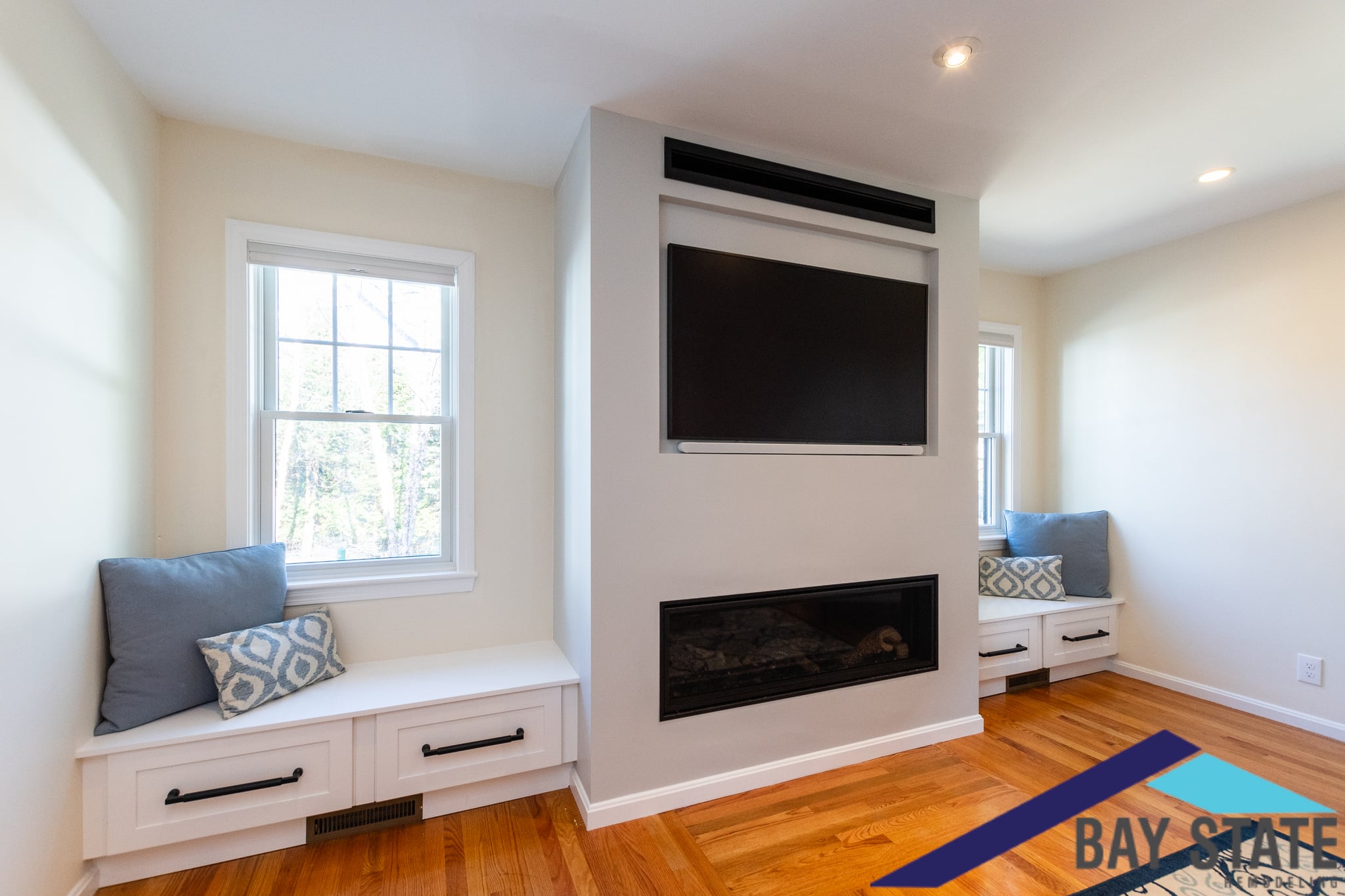
How Bay State Remodeling Approaches Every Project in Boston and Newton
Bay State Remodeling is a fully licensed and insured design-build remodeling company serving Boston, Newton, and the surrounding Greater Boston area. Every project we take on is managed by a Massachusetts-licensed Construction Supervisor, fully permitted through the appropriate local authority, and covered by comprehensive general liability and workers’ compensation insurance. We never ask clients to skip permits, and we never subcontract critical work to unlicensed tradespeople.
Whether you are planning a bathroom transformation, a kitchen renovation, or a larger addition or conversion project, we bring the same level of professionalism and craftsmanship to every scope. Explore our bathroom decor ideas and attic conversion ideas guides to see how we approach the design and planning phase of our most popular project types.
Ready to Find the Right Contractor for Your Boston or Newton Home?
You now have the knowledge to evaluate any contractor with confidence. The next step is putting it into practice. Bay State Remodeling welcomes homeowners who ask hard questions, request detailed proposals, and want to understand every aspect of their project before signing. That is exactly the kind of client we build lasting relationships with.
Contact us today to schedule a no-pressure consultation. We will walk through your project goals, share relevant examples from our portfolio, and give you a clear picture of what working with Bay State Remodeling looks like from start to finish.
Schedule Your Consultation with Bay State Remodeling and take the first step toward a renovation done right.
Frequently Asked Questions
Does a remodeling contractor in Massachusetts need to be licensed?
Yes. Any contractor performing home improvement work on a one-to-four family owner-occupied property in Massachusetts must be registered as a Home Improvement Contractor with the Office of Consumer Affairs and Business Regulation. Projects involving structural work additionally require a Massachusetts Construction Supervisor License for the person overseeing construction. Always verify both credentials before signing a contract.
How many bids should I get before hiring a remodeling contractor?
A minimum of three bids is the standard recommendation for any project over $10,000. Multiple bids give you a realistic sense of market pricing, allow you to compare proposals in detail, and often reveal significant differences in scope and material quality between contractors that are not obvious from the price alone.
What should a home improvement contract in Massachusetts include?
Massachusetts law requires home improvement contracts over $1,000 to be in writing and to include the contractor’s name, address, and HIC registration number, a detailed description of the work to be performed, the materials to be used, the start and estimated completion dates, the total price, and the payment schedule. The contract must also include a three-day right of rescission notice allowing the homeowner to cancel within three business days of signing.
What is the maximum deposit a contractor can require in Massachusetts?
Massachusetts law limits the initial deposit on a home improvement contract to one-third of the total contract price. Be cautious of any contractor requesting a deposit larger than this, as it violates state law and is a common warning sign of a contractor who may not complete the work as agreed.
What happens if I hire an unlicensed contractor in Massachusetts?
Hiring an unlicensed contractor in Massachusetts means you have no access to the state’s Home Improvement Contractor Guaranty Fund, which provides limited compensation to homeowners harmed by registered contractors. You also have reduced legal recourse if the work is defective or incomplete, and any unpermitted work completed by an unlicensed operator becomes your responsibility to remediate when you sell.
Your Investment Deserves the Right Team
Knowing how to choose a home remodeling contractor in MA is the difference between a project that enhances your home and your life, and one that becomes a prolonged source of stress and expense. The steps are straightforward: verify licensing and insurance, interview multiple candidates, review detailed written proposals, check references thoroughly, and never work with anyone who suggests skipping permits or pushes you to sign before you are ready.
Boston and Newton homeowners deserve contractors who are as invested in the outcome as they are. Bay State Remodeling brings that commitment to every project we take on. Reach out today and experience the difference that proper credentials, transparent communication, and genuine craftsmanship make.
Thinking about a project of your own
A 30-minute consult is usually enough to confirm whether we are the right fit.
Book a consult